
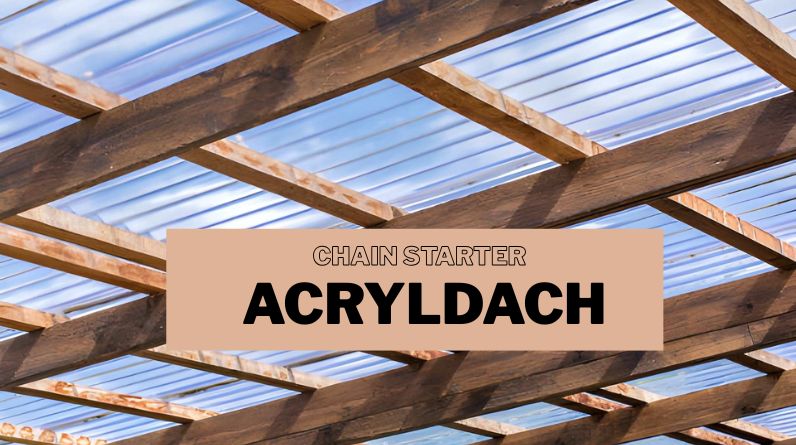

- Lightweight acrylic roofing that balances transparency and structural strength.
- High natural light transmission reduces reliance on artificial lighting.
- UV-resistant and weatherproof, suitable for diverse climates.
- Customizable in design: clear, tinted, frosted, or curved panels.
- Durable with low maintenance requirements, lasting 15–30 years.
- Practical applications for residential, commercial, and agricultural spaces.
What is Acryldach?
Acryldach is a roofing system constructed from acrylic sheets, primarily polymethyl methacrylate (PMMA). Designed to combine clarity, durability, and lightweight performance, it allows daylight to pass through while offering protection from weather elements. Originating from German construction terminology, “Acryl” refers to acrylic and “Dach” means roof, highlighting its core material and application. It is widely used for patios, pergolas, skylights, greenhouses, and other outdoor structures where both visibility and protection are desired.
Key Material and Structural Advantages
Optical Clarity and Light Transmission
Acryldach panels allow up to 92% of visible light to pass through, making them comparable to glass while weighing significantly less. This high light transmission enhances interior daylighting, reduces energy consumption, and improves occupant comfort in both residential and commercial settings.
Lightweight and Structural Efficiency
The reduced weight of acrylic sheets allows for simpler supporting frames and decreases the overall load on the building structure. This advantage also simplifies installation, reduces labor costs, and makes retrofitting or expansion easier compared to traditional glass or metal roofing.
UV and Weather Resistance
High-quality Acryldach panels are manufactured with UV-stable formulations to prevent yellowing and surface degradation over time. The material also withstands rain, snow, hail, and temperature fluctuations, ensuring long-term clarity and durability. These properties make Acryldach suitable for areas exposed to direct sunlight and harsh weather conditions.
Impact Resistance and Safety
Acrylic is more impact-resistant than standard glass, reducing the risk of shattering. While polycarbonate may outperform acrylic in extreme impact scenarios, Acryldach maintains an optimal balance between safety, clarity, and affordability. Its panels are less likely to create sharp shards if broken, making it safer for both residential and public installations.
Design Flexibility and Customization
Panel Formats
Acryldach is available in flat sheets, corrugated panels, and multi-wall forms. Flat sheets provide clean, contemporary lines suitable for skylights and minimalist structures. Corrugated panels enhance strength for carports and terraces, while multi-wall designs improve thermal insulation for greenhouses or energy-sensitive applications.
Color and Transparency Options
Panels can be clear for maximum daylight, frosted for privacy, or tinted to reduce glare and heat gain. Custom-colored sheets are available for aesthetic integration into architectural designs. The material can also be heated and bent, enabling curved roofs, artistic façades, or specialized skylights without compromising clarity or strength.
Integration with Architectural Features
Designers can combine Acryldach with metal or wooden frames to create visually striking outdoor structures. Its adaptability allows for both flat and arched roofs, supporting creative and modern building concepts while maintaining structural integrity and performance.
Installation and Maintenance Considerations
Installation Guidelines
Accurate measurement and proper planning are essential for successful Acryldach installation. Panels should be pre-drilled with oversized holes to allow for thermal expansion, and fasteners should use flexible washers to maintain water-tight seals. Overlaps and sealing systems are critical to prevent leaks and maintain long-term durability.
Handling Thermal Expansion
Like all thermoplastics, acrylic expands and contracts with temperature changes. Installers must account for this movement to avoid buckling or cracking. Proper clearance at panel edges and careful fastening help maintain the integrity of the roofing system over decades.
Routine Maintenance
- Clean panels periodically with mild soap and water to preserve clarity.
- Inspect seals and fasteners annually to prevent leaks.
- Remove debris from the surface to avoid scratches or clouding.
- Repair minor scratches with polishing compounds or replace panels if severely damaged.
Applications of Acryldach
Residential Uses
Acryldach is ideal for patios, pergolas, carports, balconies, and skylights. Its transparency creates bright, inviting outdoor spaces while providing weather protection. Homeowners benefit from both aesthetic appeal and practical performance.
Commercial Applications
Commercial buildings employ Acryldach for atriums, office walkways, mall skylights, and covered outdoor areas. Its durability, light transmission, and low maintenance make it well-suited for high-traffic or visually prominent structures.
Agricultural and Industrial Uses
Greenhouses and nurseries utilize Acryldach for high light transmission with UV protection, promoting plant growth and temperature stability. Industrial facilities can incorporate panels for rooflights that reduce electricity costs while maintaining safety and structural efficiency.
Cost, Longevity, and Value
Cost Considerations
The price of Acryldach varies based on panel thickness, coatings, installation complexity, and regional factors. Although premium acrylic may have a higher upfront cost than basic plastic sheets, the savings in reduced structural support, faster installation, and lower maintenance offset initial expenses.
Expected Lifespan
With proper installation and care, Acryldach can last 15–30 years. UV-stable panels maintain transparency and resist weathering, ensuring long-term performance and aesthetic appeal.
Long-Term Value
The combination of daylighting benefits, energy savings, structural efficiency, and minimal upkeep makes Acryldach a cost-effective solution for both residential and commercial projects. Its flexibility in design also enhances property value and overall usability of outdoor spaces.
Practical Takeaways and Expert Insights
- Prioritize UV-stable panels to maintain long-term clarity and durability.
- Account for thermal expansion during installation to avoid damage.
- Use appropriate panel thickness and format based on structural requirements and climate conditions.
- Regularly inspect seals, fasteners, and surfaces to prevent minor issues from escalating.
- Select design variations—tinted, frosted, or curved panels—according to functional and aesthetic needs.
FAQs about Acryldach
What is Acryldach best used for?
Acryldach is best used for outdoor spaces that require both natural light and weather protection, including patios, skylights, pergolas, carports, and greenhouses.
How long does Acryldach last?
High-quality panels can last between 15 and 30 years, maintaining clarity and structural integrity with proper maintenance.
Is Acryldach better than polycarbonate?
Acrylic provides superior optical clarity, design flexibility, and UV resistance, while polycarbonate may be preferred for extreme impact requirements. Choice depends on project priorities.
Does Acryldach require special maintenance?
No specialized tools are required. Routine cleaning, inspection of seals, and debris removal are sufficient to maintain long-term performance.
Can Acryldach handle harsh weather?
Yes, it is resistant to rain, snow, hail, and temperature fluctuations, making it suitable for diverse climates and exposure levels.
Conclusion
Acryldach offers a modern, versatile, and efficient roofing solution for spaces that prioritize daylight, aesthetics, and durability. Its lightweight construction, optical clarity, UV resistance, and customizable design make it suitable across residential, commercial, and agricultural applications. Proper installation and routine maintenance ensure longevity, while design flexibility allows for both functional and visually appealing roofing. By integrating Acryldach into a building project, users gain a roofing system that enhances natural light, protects against weather, and delivers long-term value.